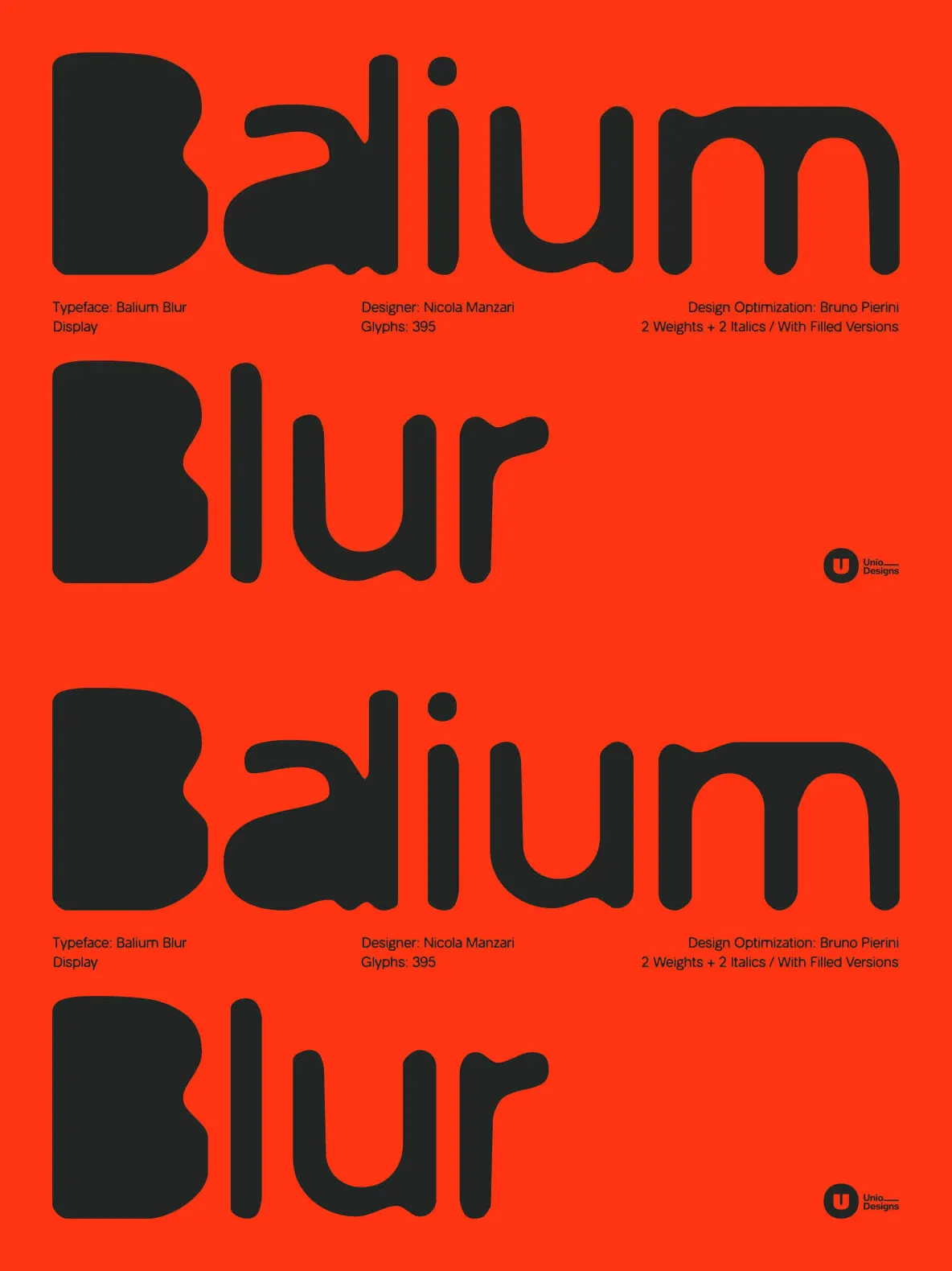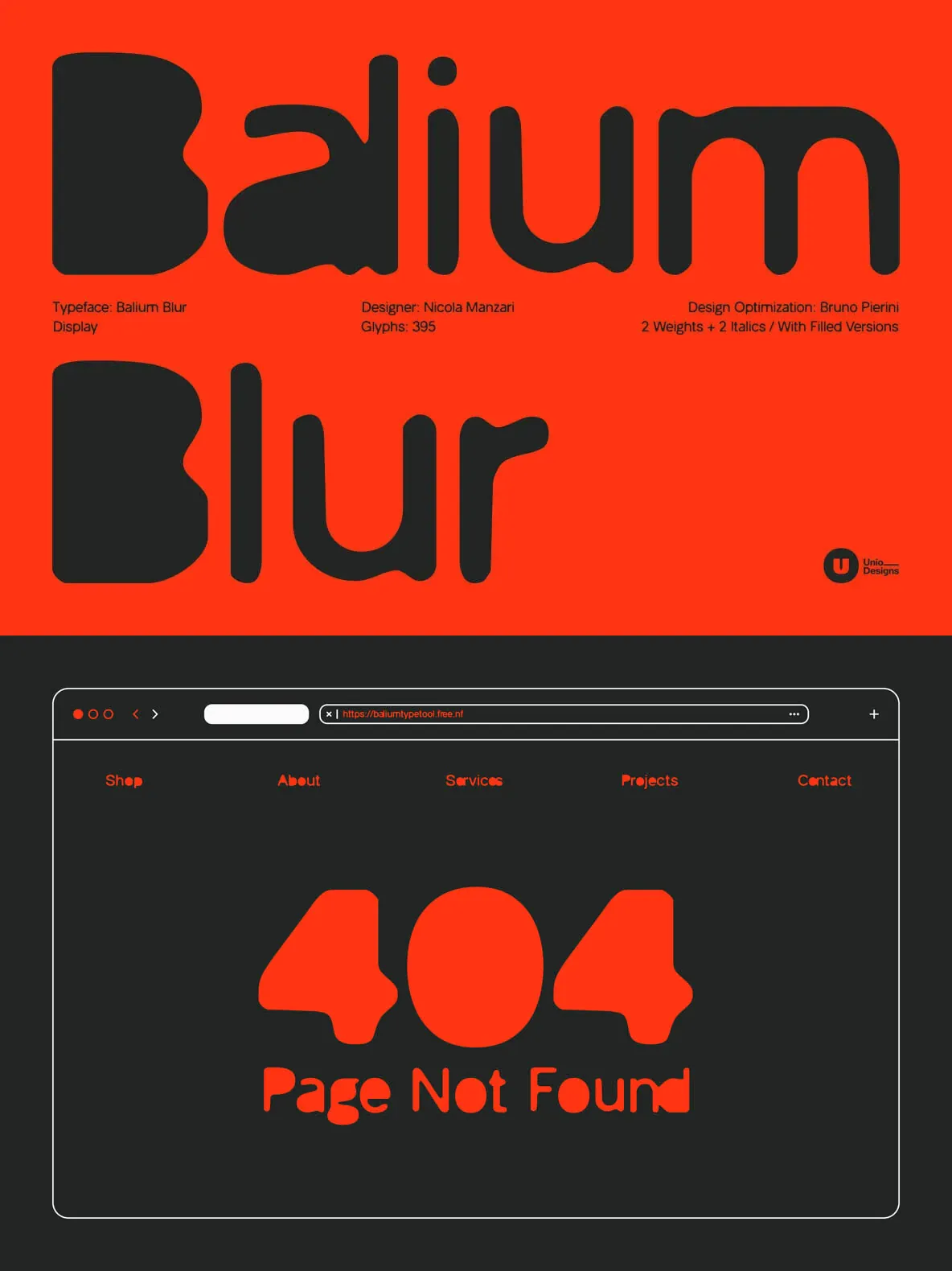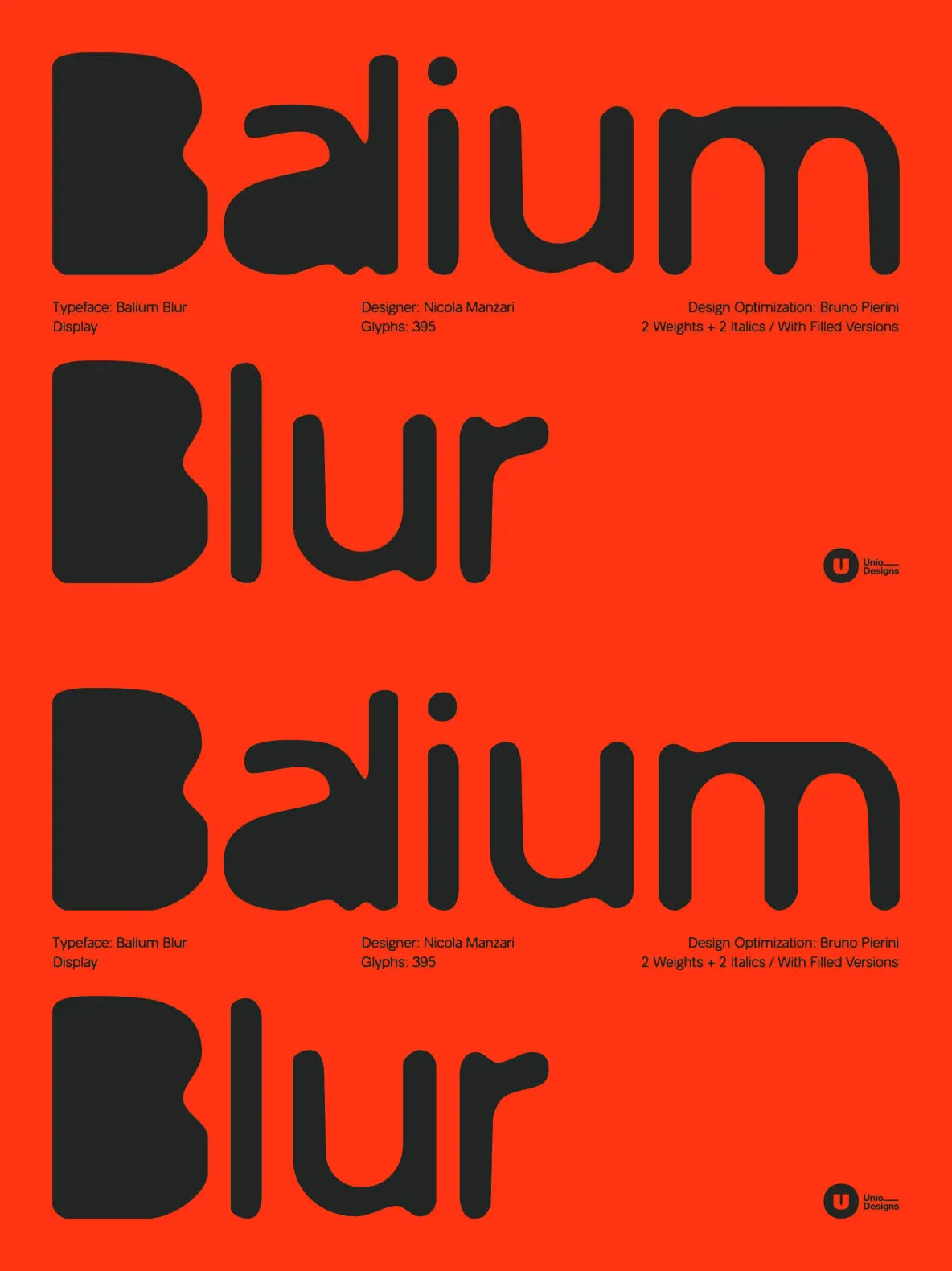
Balium Blur — Overprint as a Typeface System
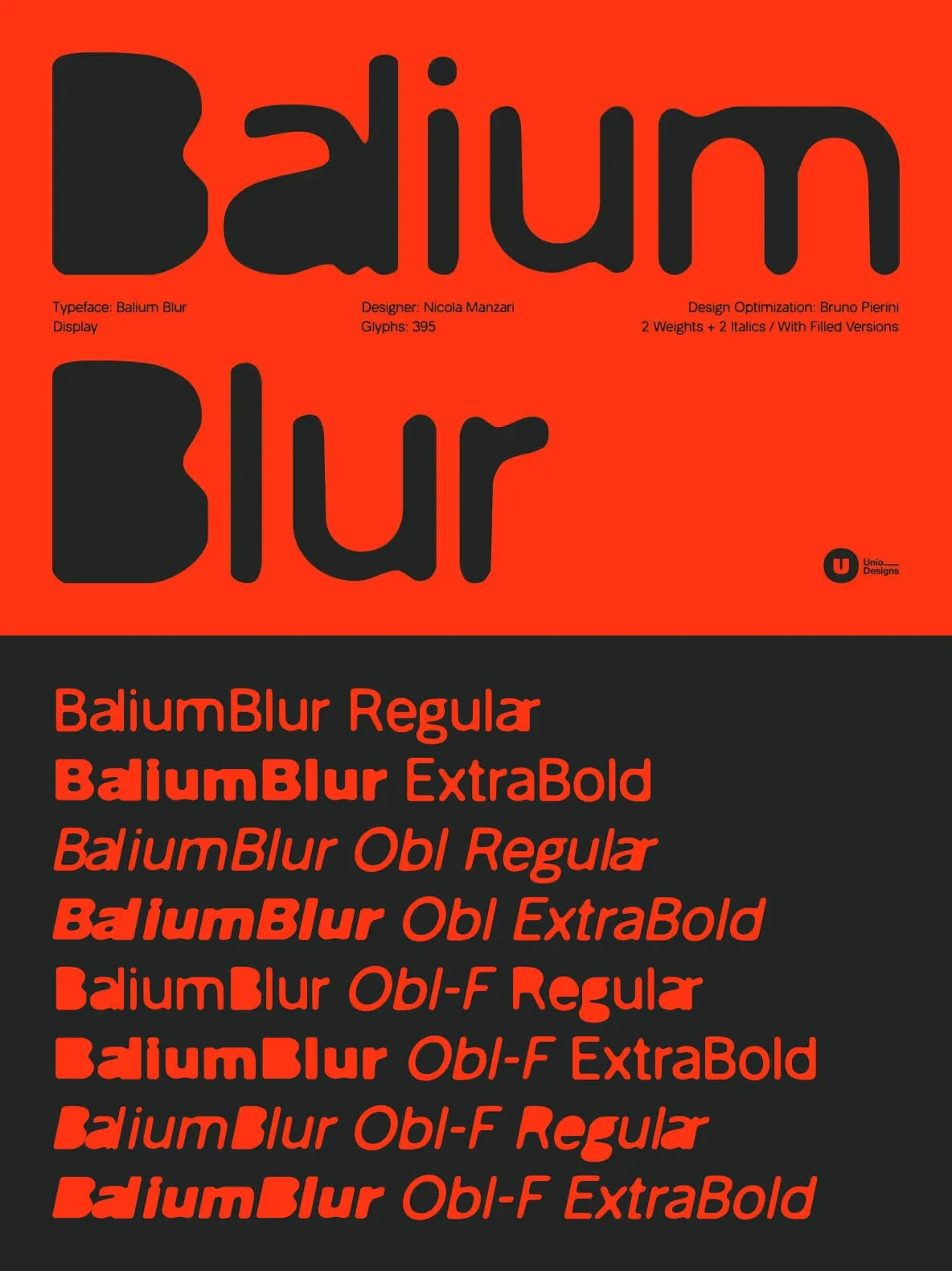
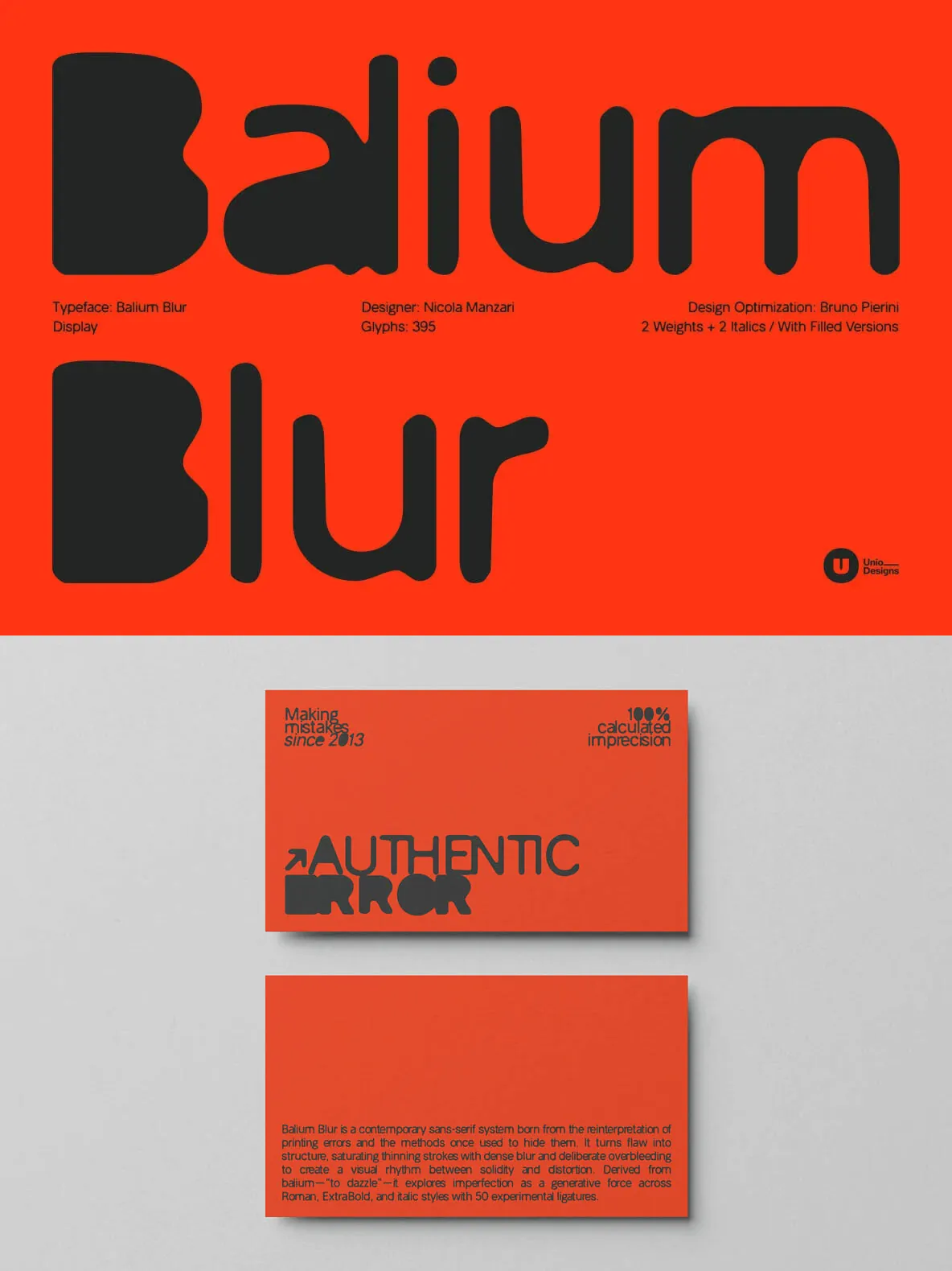
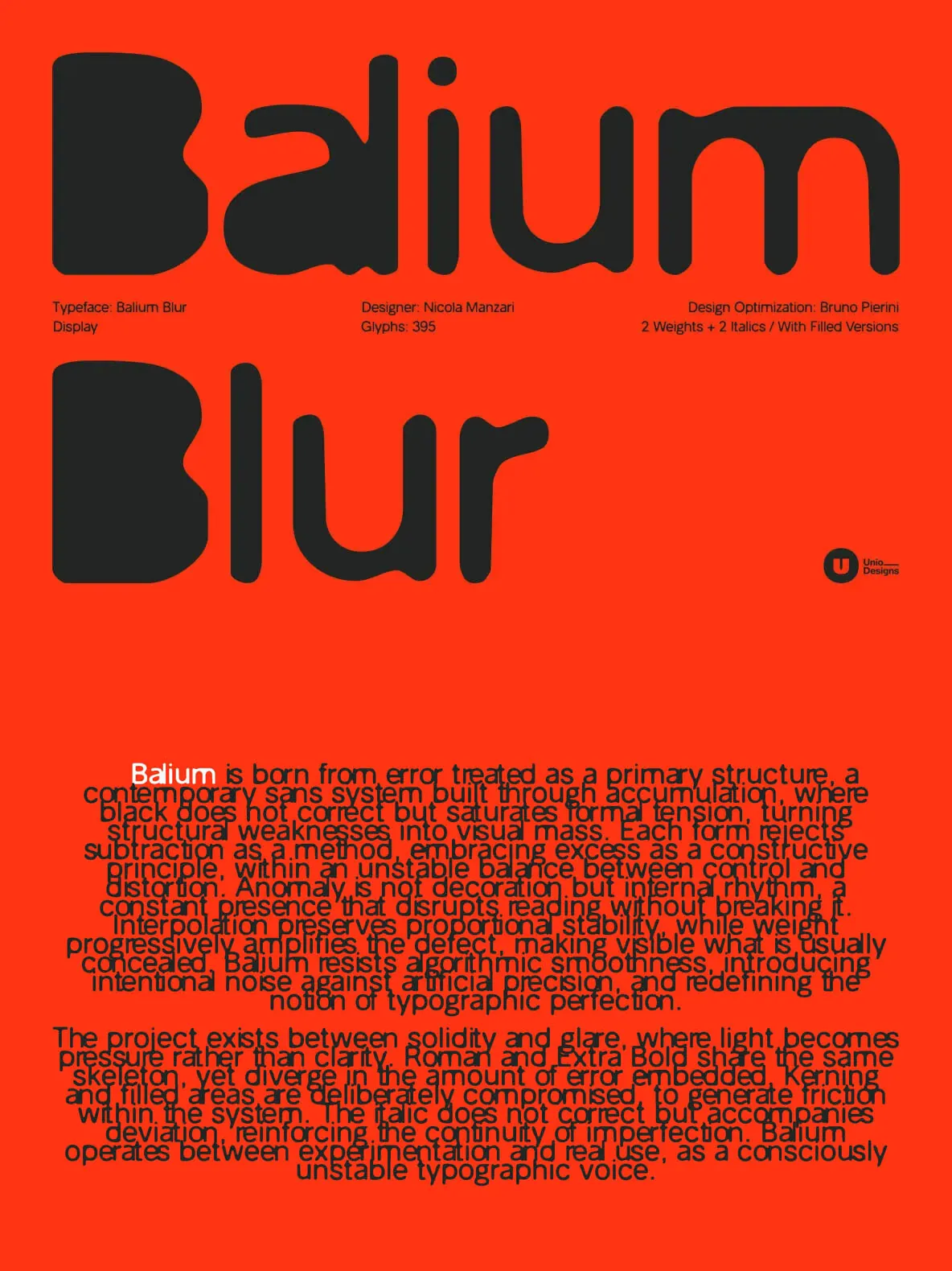
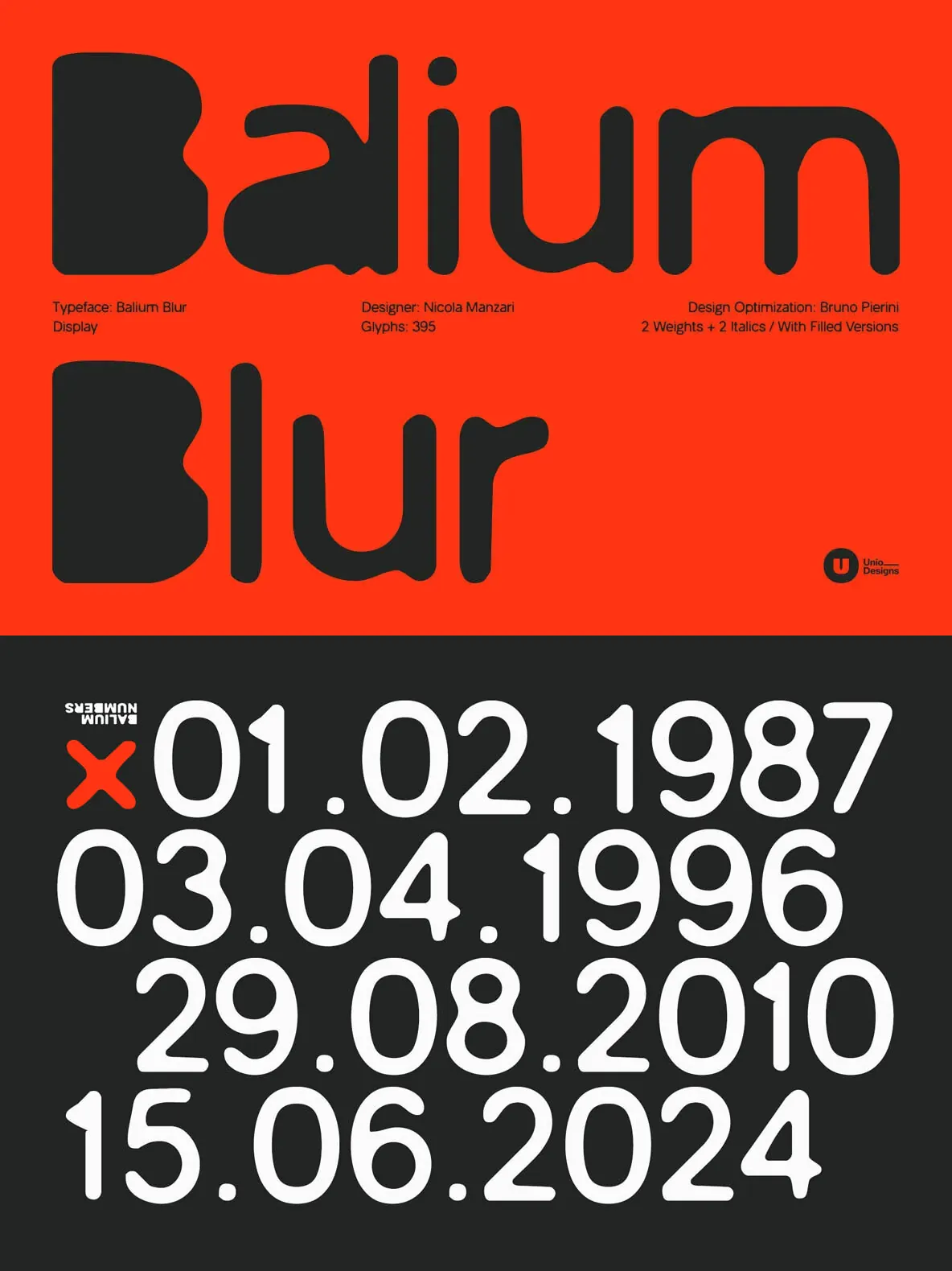
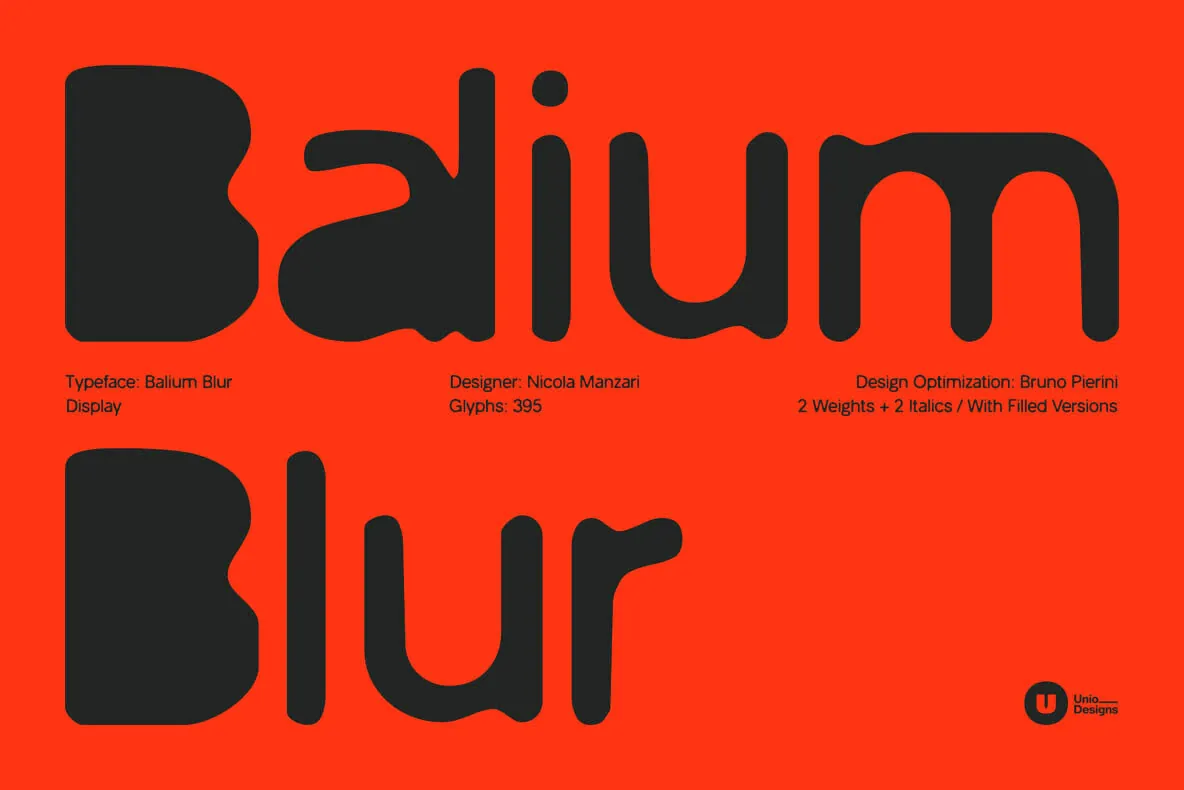
Balium Blur is a contemporary sans serif type system that treats print error as method. Instead of thinning strokes where forms would normally clog, it pushes ink to the edge—saturating counters, forcing overbleed, and allowing blur to become a repeatable structural motif. The result is a letterform language that moves between clarity and distortion, with irregular dark pockets that read as both texture and signal. For graphic designers working in a culture of algorithmic smoothness, Balium Blur offers a controlled way to reintroduce noise—useful in branding, editorial typography, and visual identities that benefit from a slightly destabilized surface.
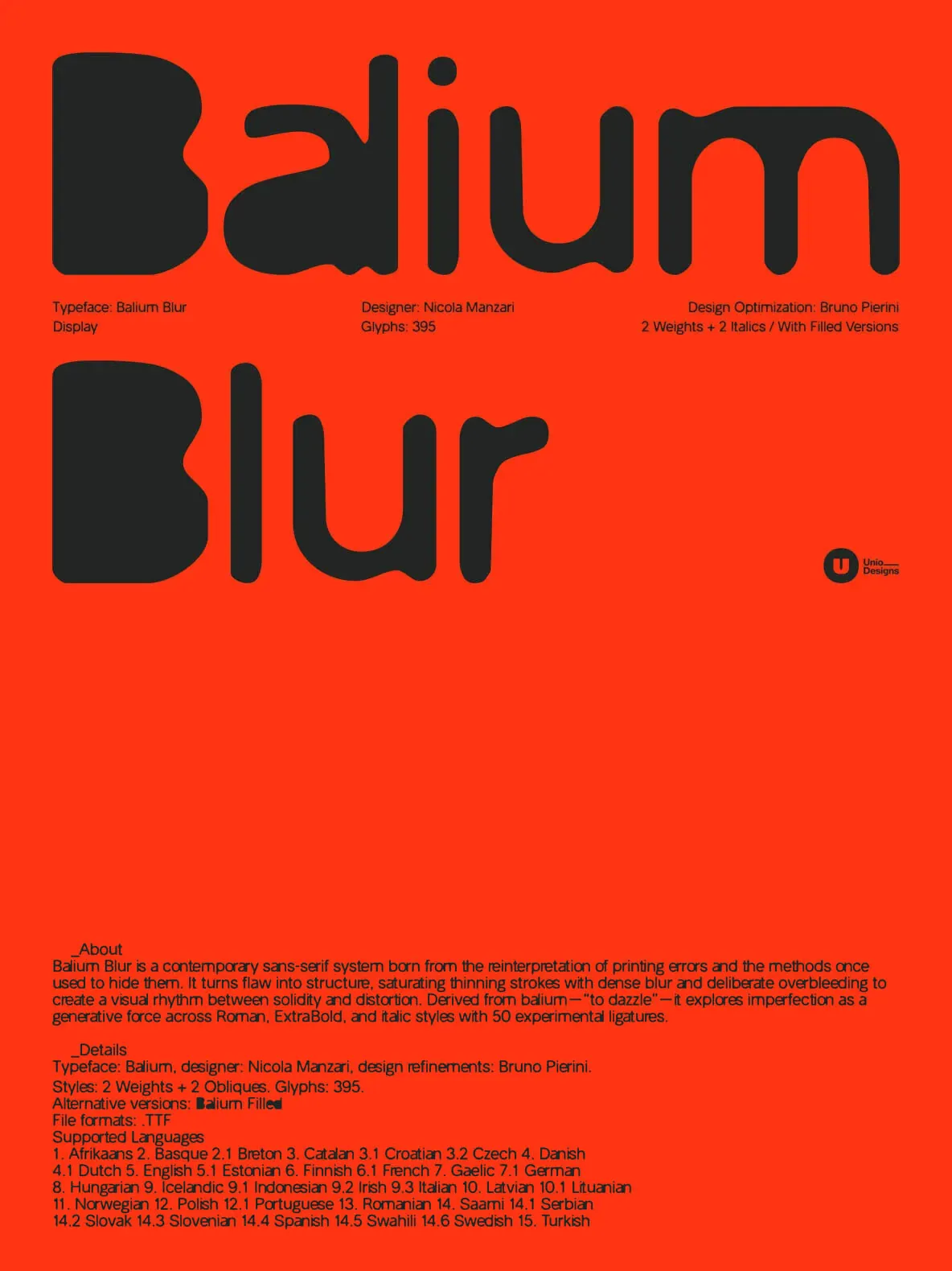
The name traces to the Latin balium, linked to abbagliare: to dazzle, to overwhelm with glare. That idea of visual excess is present in the construction itself. Balium Blur doesn’t clean up by subtraction; it builds by accumulation, where extra material becomes the system’s logic and the so-called flaw becomes a generative rule. Across the family, anomalies intensify progressively, giving you a clear axis to dial the effect up or down depending on context.
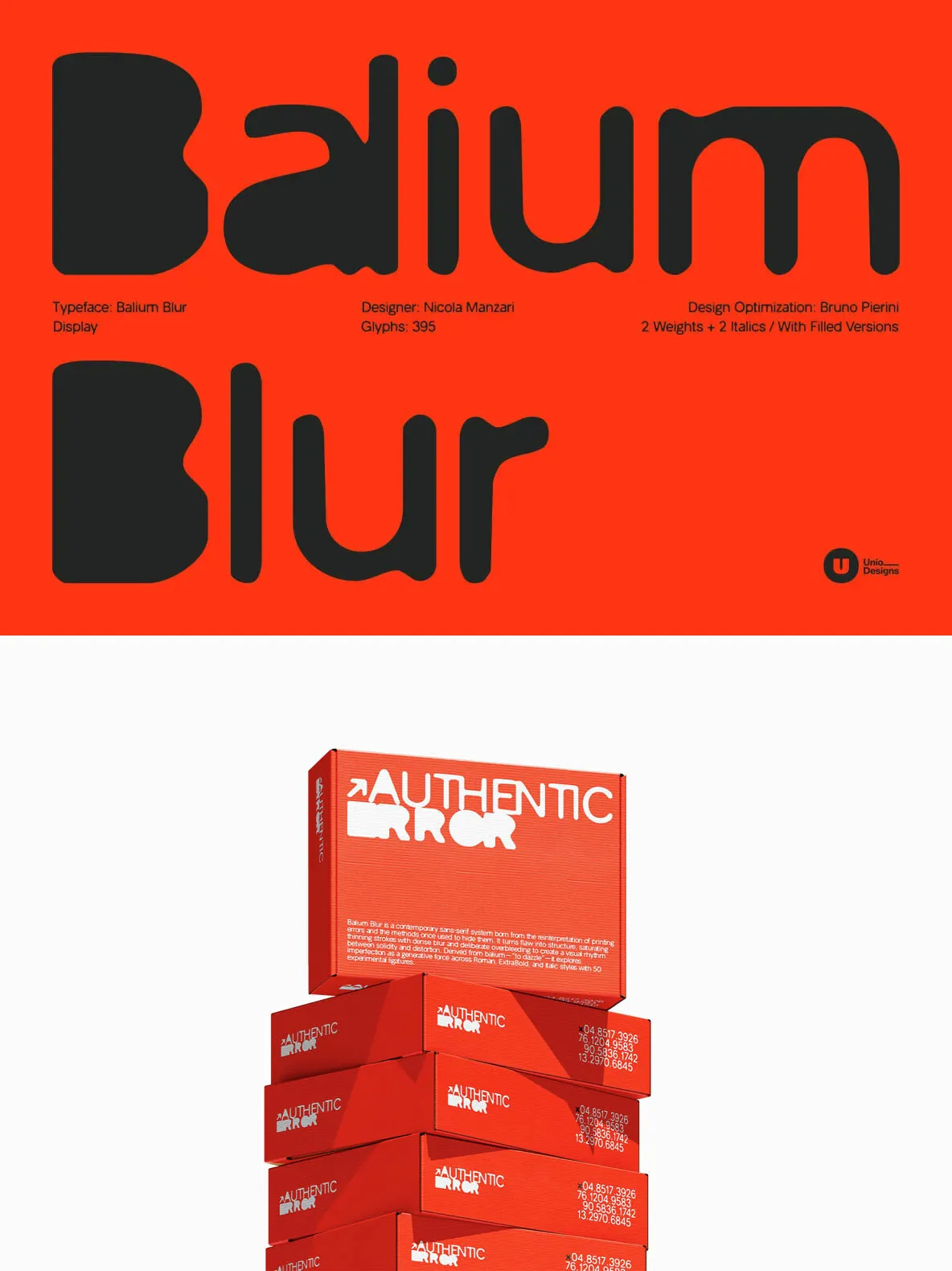
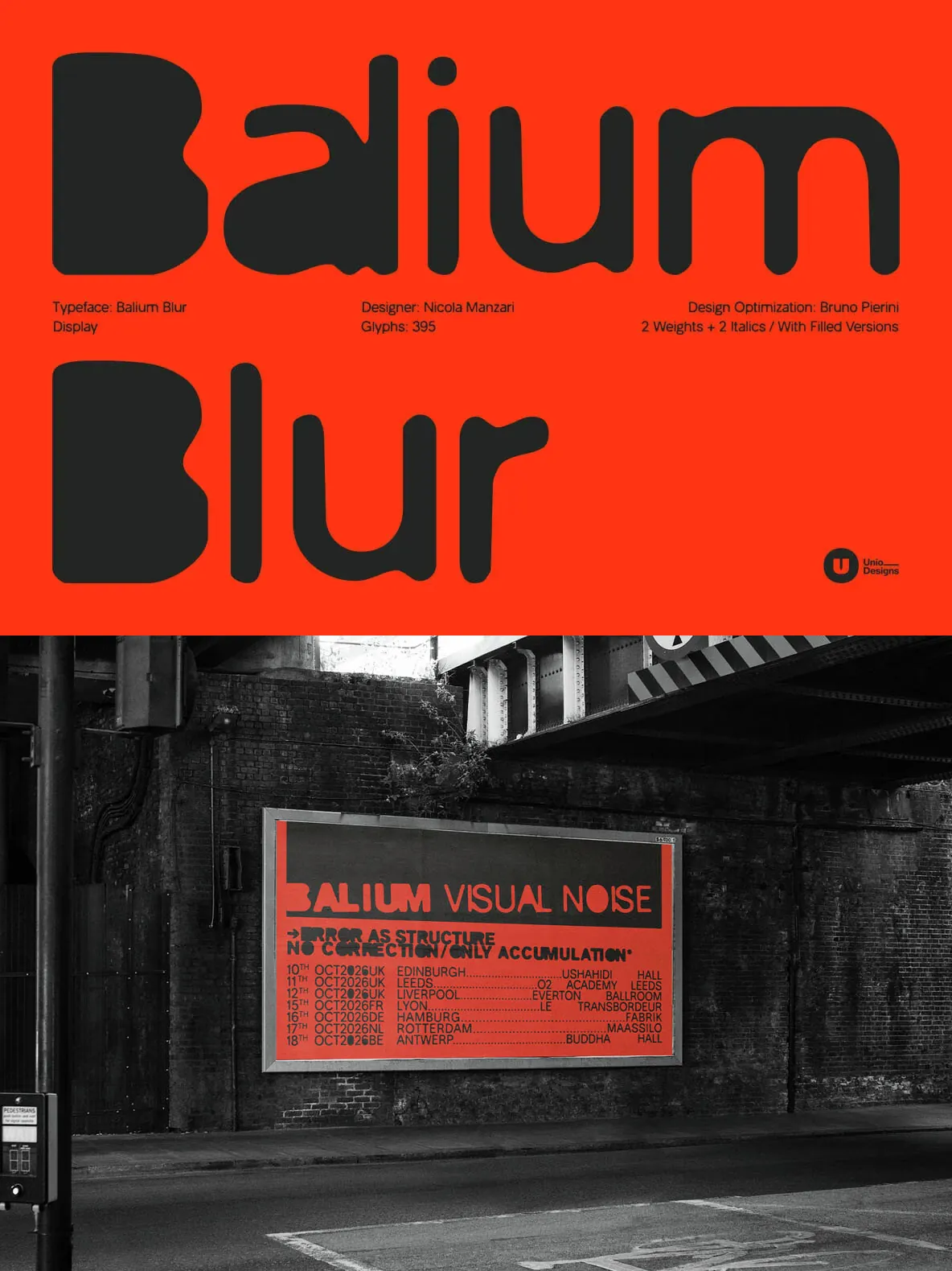
Used large, the overprint behavior becomes atmospheric and graphic; used smaller, it turns into a subtle pressure in the texture of a line—still legible, but never neutral. Balium Blur remains versatile despite its experimental premise: it can sit comfortably in a headline, carry a poster, or add friction to interface typography when you want the voice of the system to stay audible. If you’re looking for a sans serif that makes process visible—ink, error, and interference included—Balium Blur supplies a coherent framework rather than a one-off gesture.
Features
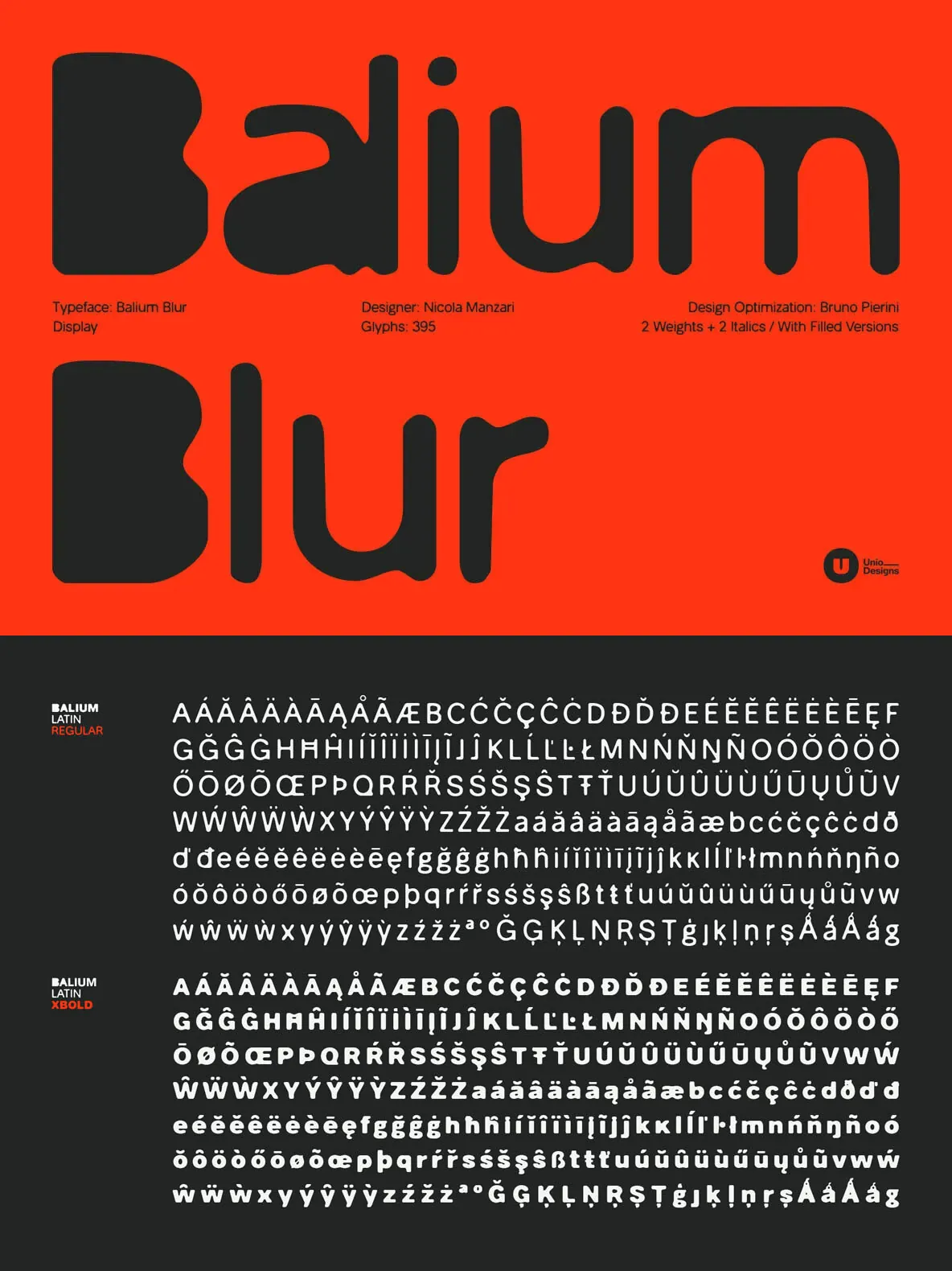
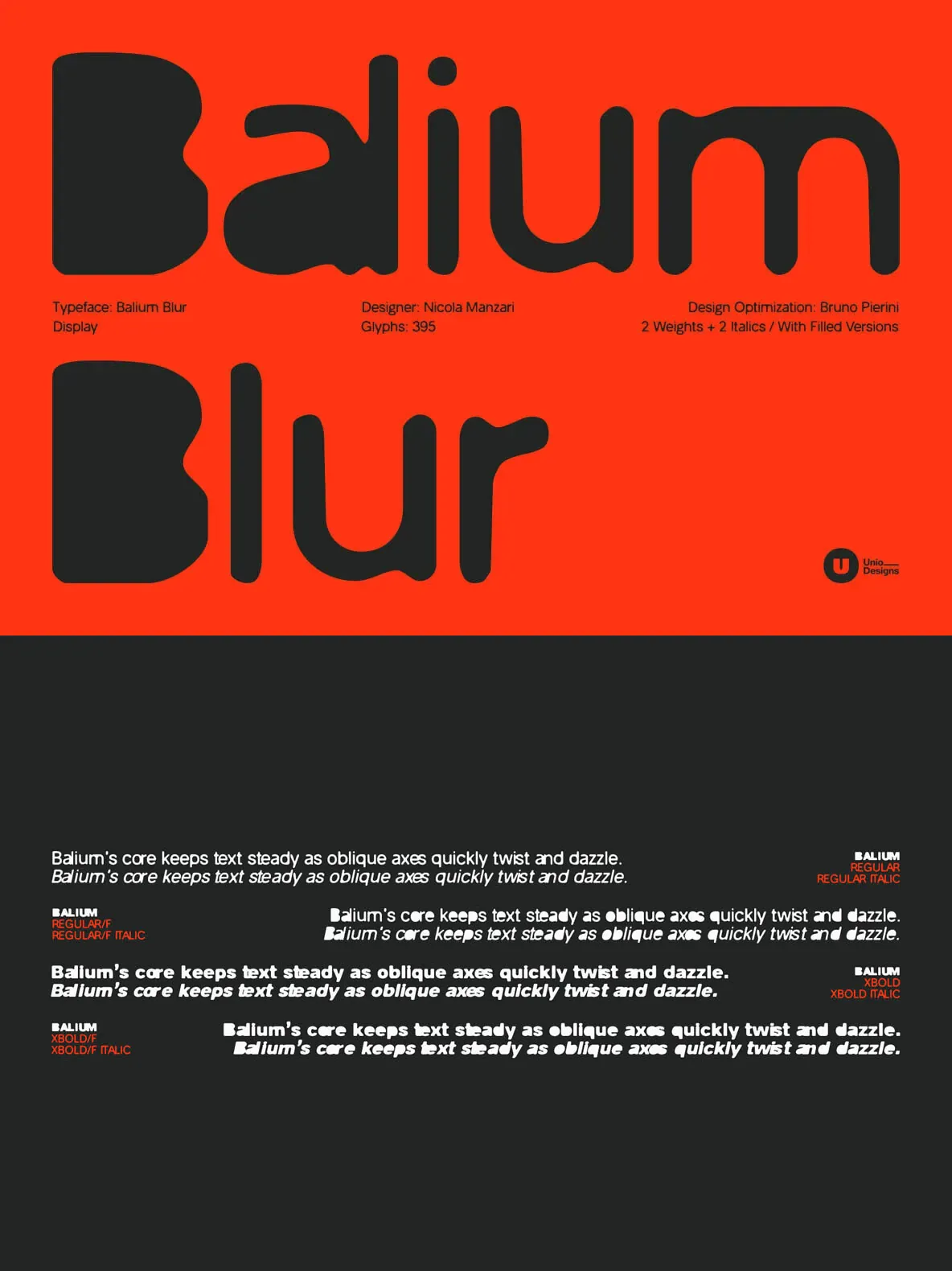
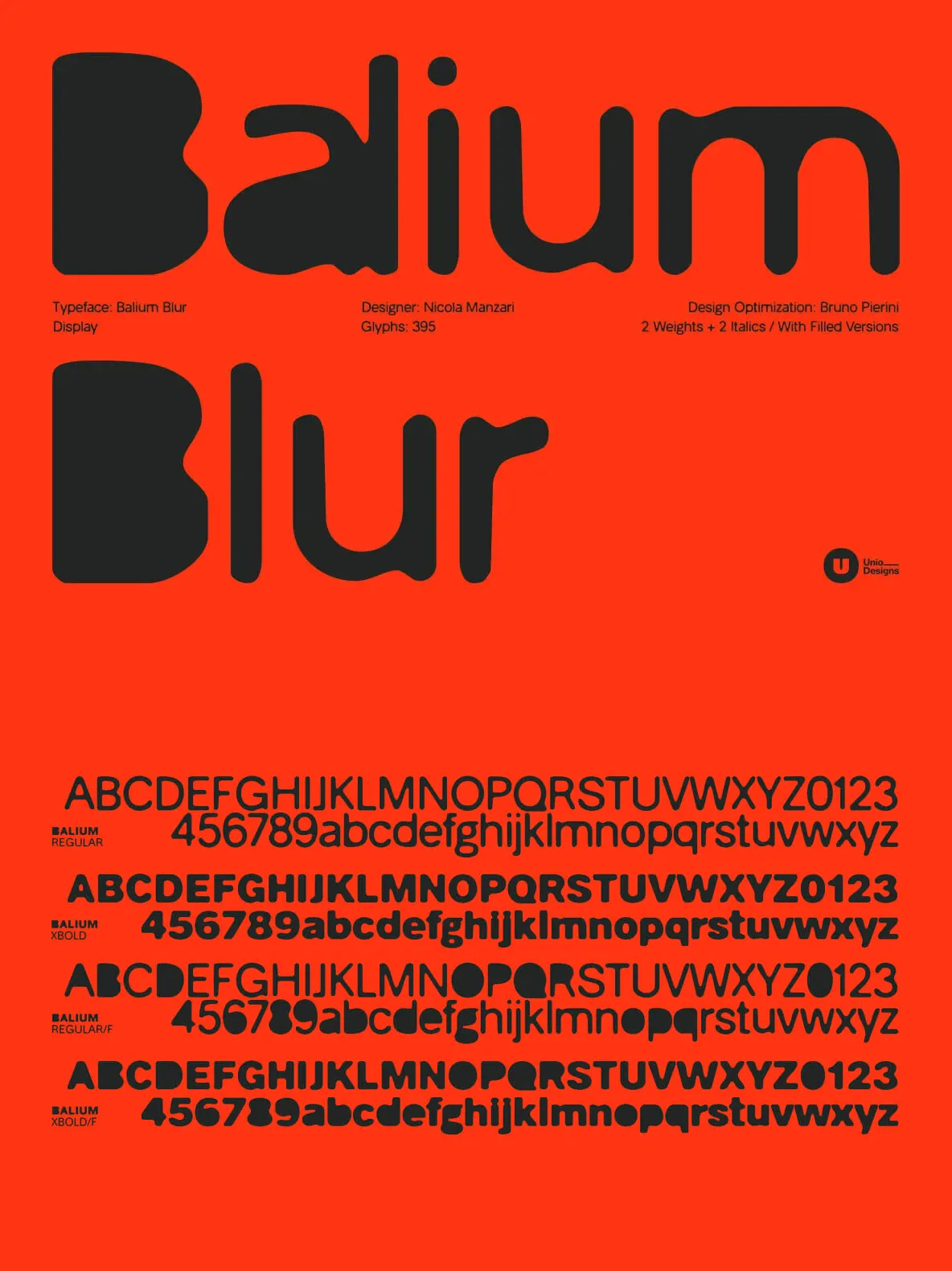
Two core weights: Roman and Extra Bold, each paired with a matching italic style
Overprint-driven “Filled” styling that increases saturation and blur while keeping proportions consistent
50 discretionary ligatures based on common letter bigrams, designed to overbleed into one another for a nested, self-referential effect
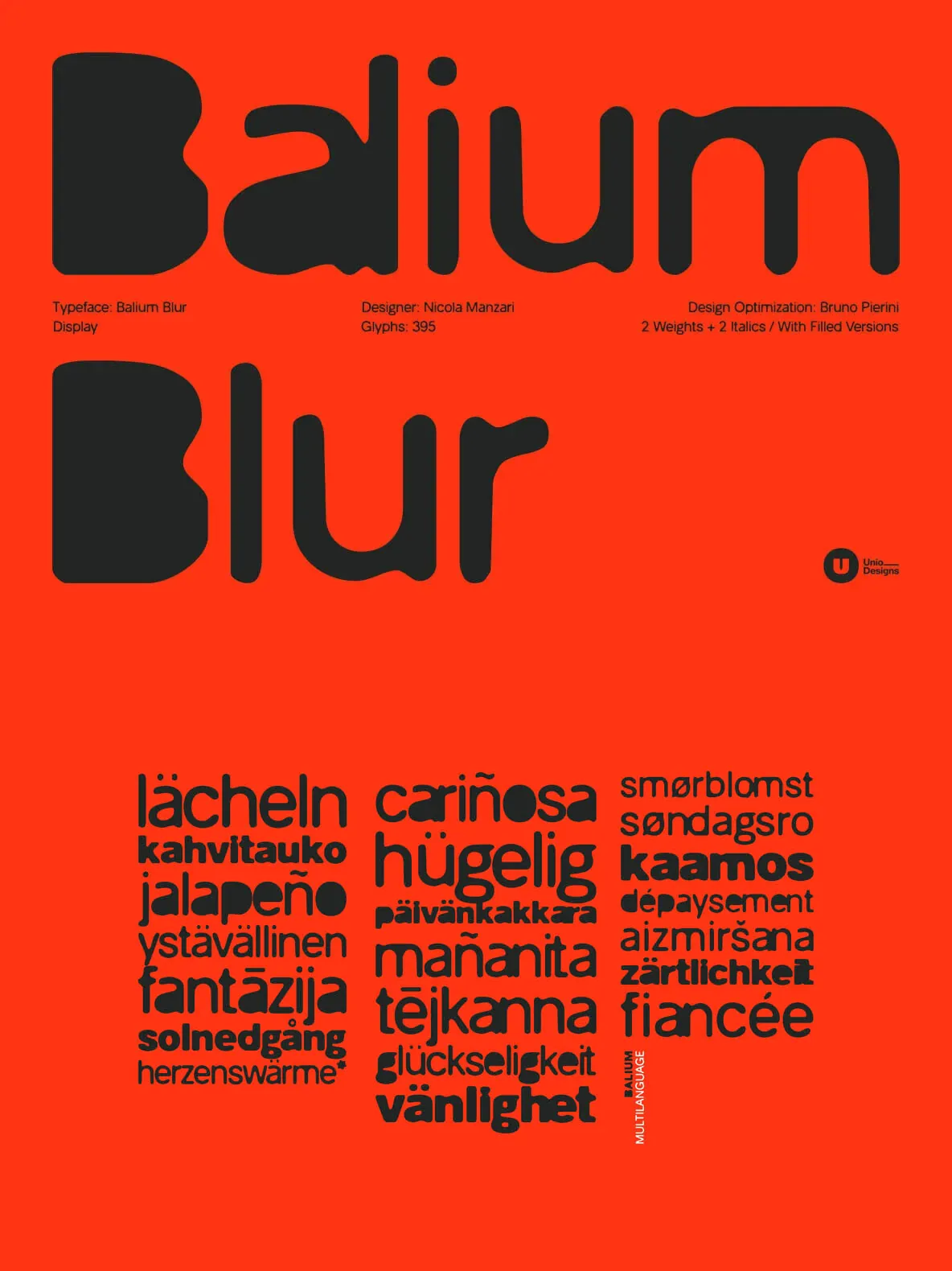
Extended language coverage with 447 glyphs